Learn
Your game, step by step
BIG / SMALL / HELP
Do we have the ball, or don't we?
Have it? Get BIG. Lost it? Get SMALL. Always HELP.
BIG SMALL HELP
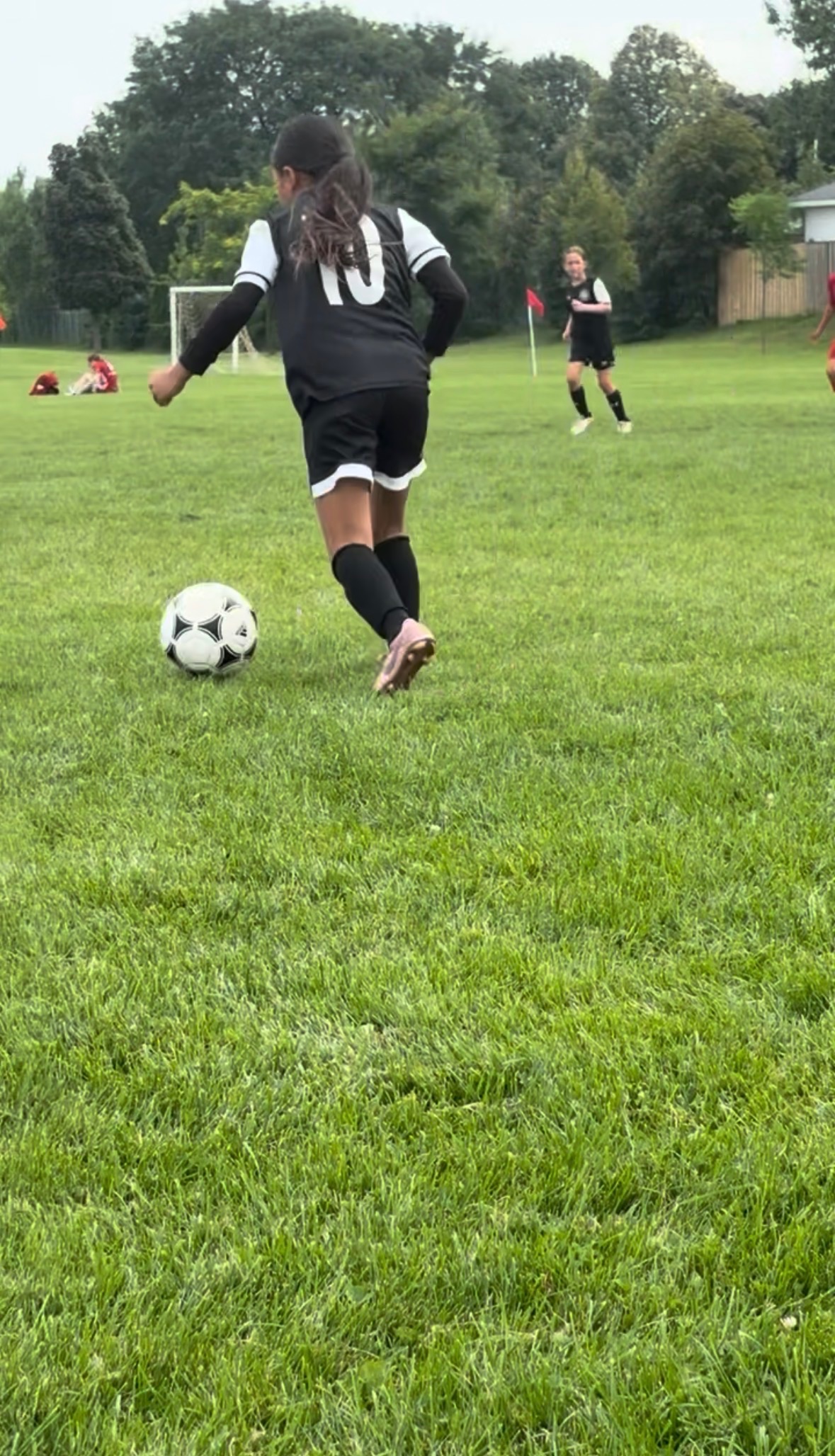
She carries the ball wide. What can that create?
Get BIG to create space. Then look for where the danger is.
Your tools · tap one
Go deeper: BIG · SMALL · HELP
Try it Every time the ball changes teams, ask yourself: BIG or SMALL? Then move before anyone tells you.
AttackingField big
Get wide, stay high, use both sides, make defenders move.
Open it
Field big
Get wide, stay high, use both sides, make defenders move.
When we have the ball, we make the field as large as we can. Width and depth pull defenders apart; switching to the other side makes them run. Tired, stretched defenders leave gaps.
- Get wide
- Stay high
- Use both sides
- Make them move
Practise it: Watch any game on TV. Every time the ball switches sides, count how many defenders had to move.
Watch for it: After a switch to the far side, how much space does the winger have?
DefendingField small
Protect the middle, closest player presses, everyone else covers.
Open it
Field small
Protect the middle, closest player presses, everyone else covers.
When we lose the ball, we make the field small. Protect the middle, the closest player presses, and teammates protect and cover behind her. Delaying the attack is successful defending — you do not have to win the ball to do your job.
- Protect the middle
- Closest player presses
- Cover behind her
- Slow her down
Practise it: With one friend: she attacks, you delay without diving in. Count to three before you try to win it.
Watch for it: When we lose the ball, how long does it take us to get compact?
FoundationHelp
Nobody is alone — with the ball or without it.
Open it
Help
Nobody is alone — with the ball or without it.
When a teammate has the ball, give her somewhere to play it. When a teammate is defending, get close enough to back her up. HELP is the word that ties BIG and SMALL together.
- Can she see you?
- Get close enough to matter
- Help again after you pass
Watch for it: When a teammate has the ball, how many of us are close enough to help?
SEE IT
Can I see the picture?
Look before the ball arrives.
SCAN → PLAN → PLAY TAKE A PICTURE
The ball is coming to her. What should she do first?
She looked first, so she already knew where the space was.
Your tools · tap one
Go deeper: SEE IT
Try it Before the ball reaches you, look over your shoulder. Can you say what you saw?
ScanningTake a picture
Look before the ball arrives, so you already know your next move.
Open it
Take a picture
Look before the ball arrives, so you already know your next move.
Before the ball gets to you, look up. Know where the space is, where your teammates are, and who is closest to you — then you can play your first touch with a plan instead of a panic.
- Head up before it comes
- Who is closest to you?
- Picture first, touch second
Practise it: Against a wall: look over one shoulder, then receive and turn the other way. Say out loud what you saw before you touched it.
Watch for it: Watch a teammate receive the ball. Did she look before it arrived, or only after?
REACT
Did the picture just change?
The ball changed teams. React first.
WIN IT → BIG → GO LOSE IT → SMALL → HELP
What’s first?
We just won the ball.
We just lost the ball.
Your tools · tap one
Go deeper: REACT
Try it When we lose it, be the first to get SMALL. When we win it, be the first to get BIG.
TransitionWin it, lose it
WIN IT → BIG → GO. LOSE IT → SMALL → HELP.
Open it
Win it, lose it
WIN IT → BIG → GO. LOSE IT → SMALL → HELP.
The ball changes teams all the time, and every change flips the picture. Win it: get BIG and look to go forward. Lose it: get SMALL and help win it back. The team that reacts first often has the extra player for a few seconds.
- Win it → BIG → GO
- Lose it → SMALL → HELP
- React before you're told
Watch for it: In the three seconds after the ball changes teams, who reacts and who watches?
HELP
Can my movement give her another option?
Make a triangle. Find the window. Move after you pass.
HELP TRIANGLE WINDOW PASS & MOVE
Where do you go?
She has the ball. A defender is right behind you.
You just passed.
Your tools · tap one
Go deeper: HELP
Try it After every pass, move to a new spot where the player on the ball can see you.
SupportMake a triangle
Give the ball carrier options — support, then move after passing.
Open it
Make a triangle
Give the ball carrier options — support, then move after passing.
Never leave a teammate with the ball and nowhere to play it. Get to an angle where she can see you, and once you have passed, move again so the next triangle appears.
- Give her two options
- Angle, not a straight line
- Pass and move
Practise it: Three players, one ball, keep-away. Every time someone passes, she has to move to a new angle before the next pass.
Watch for it: Count the options the ball carrier has. Is it one, or is it two?
ReceivingFind the window
Play through the gap when it is open, around it when it is closed.
Open it
Find the window
Play through the gap when it is open, around it when it is closed.
Look before receiving, find the space between two defenders, and decide: through when the gap is open, around when it is closed. Both are right answers — the mistake is not looking.
- Is the window open?
- Through or around?
- Look before you receive
Practise it: Set two cones as a gate. Pass through it when a friend leaves it open, play around it when she closes it. Ten of each.
Watch for it: When a gap closes at the last second, who changes her mind in time?
SupportThird player
The player who isn't involved yet — and gets the next pass.
Open it
Third player
The player who isn't involved yet — and gets the next pass.
While two players pass to each other, a third moves into a space the defenders aren't watching. When the ball finds her, the defence is suddenly a player short.
CREATE THE +1
Can we create or find the extra player?
2v1 or 3v2? Find the free player — or slow them down.
FIND THE +1 DELAY SHIFT HELP
Who has the +1?
Two of us, one defender, running at their goal.
Three of them are running at two of us.
Your tools · tap one
Go deeper: +1
Try it When you’re outnumbered on defence, don’t dive in. Slow her down and wait for HELP.
OverloadsFind the +1
2 against 1, 3 against 2: find the free player and use her.
Open it
Find the +1
2 against 1, 3 against 2: find the free player and use her.
An overload is having more players than the other team in one part of the field — 2 attackers against 1 defender, or 3 against 2. Somebody is free. Find her. Sometimes you pass to her; sometimes you dribble or carry the ball at a defender first so she stays free.
- Count: us and them
- Who is free?
- Draw the defender, then pass
Watch for it: When we attack, how many of us are there, and how many of them?
OverloadsDelay
Outnumbered? Slow the attack down so HELP can arrive.
Open it
Delay
Outnumbered? Slow the attack down so HELP can arrive.
When the other team has the extra player, diving in usually loses. Stay on your feet, protect the biggest danger — usually the way to goal — and slow the ball down. Every second you buy is a second for a teammate to get back.
- Don't dive in
- Protect the danger
- Buy time
Watch for it: When we're outnumbered, does the defender dive in or slow it down?
OverloadsShift
Move together toward the ball so the gaps stay closed.
Open it
Shift
Move together toward the ball so the gaps stay closed.
Defenders move as a group: when the ball moves, everybody slides across together so there is no easy gap to play through, and the most dangerous space stays covered.
SOLVE THE +1
What solution fits this situation?
No pattern to copy. See the problem, pick the answer.
SCAN → REACT → +1 → SOLVE IT
What’s the problem?
We just won it. Three of us, two of them.
We just lost it. Three of them, two of us.
Your tools · tap one
Go deeper: SOLVE IT
Try it Before the ball comes: SCAN. When it changes: REACT. Then ask yourself — who has the +1?
Putting it togetherSolve it
See the problem, then choose the answer that fits.
Open it
Solve it
See the problem, then choose the answer that fits.
There is no single right pattern. SCAN to see the picture, REACT when it changes, work out who has the +1 — then choose: pass, dribble, carry, delay or help. The best solution is the one that fits this moment.
- SCAN → REACT → +1 → SOLVE IT
- What's the problem?
- What fits this moment?
Watch for it: Who solved the problem before anyone on the sideline said anything?
Practice, then a real game
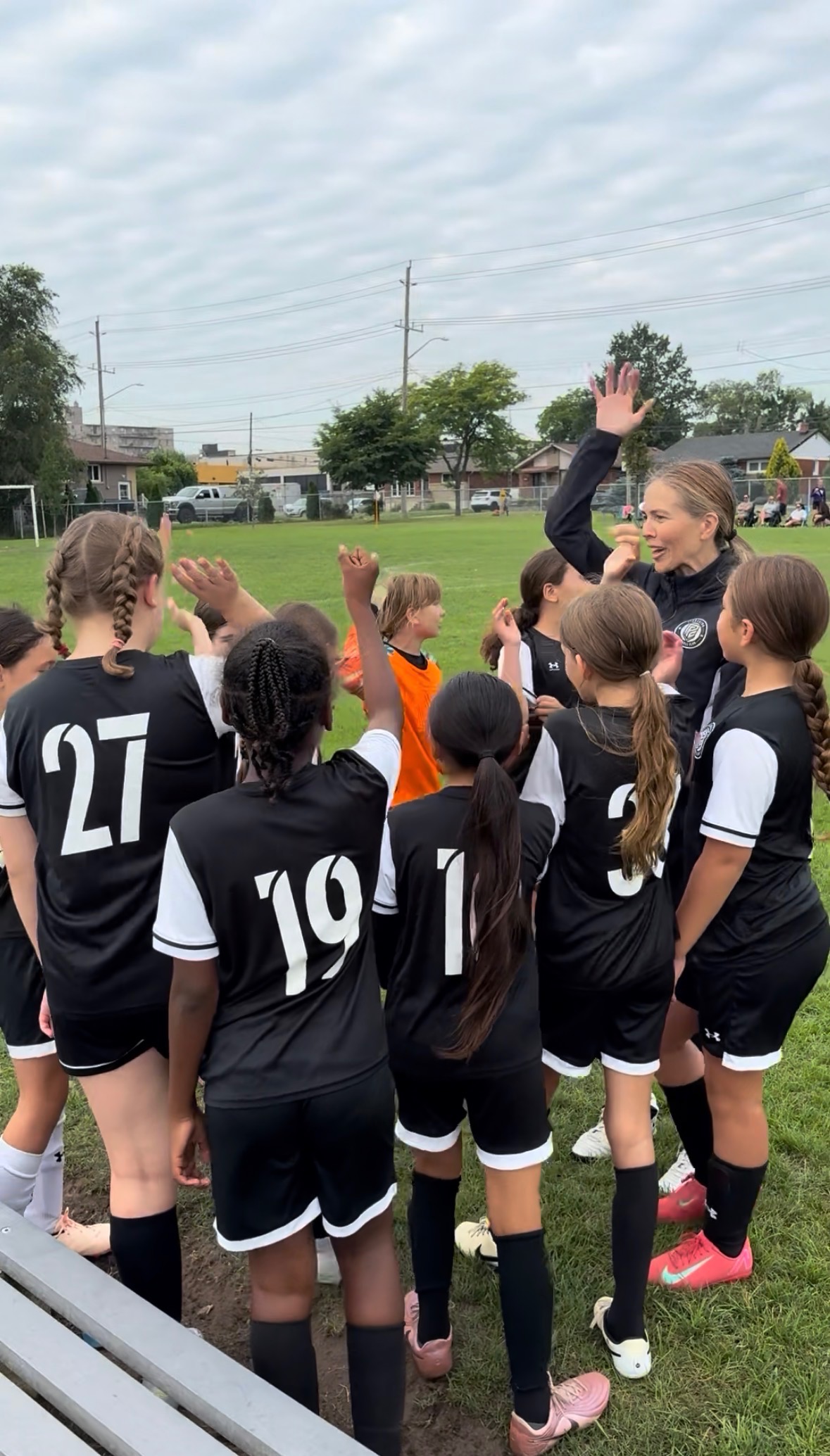 Wednesday · we practised it